
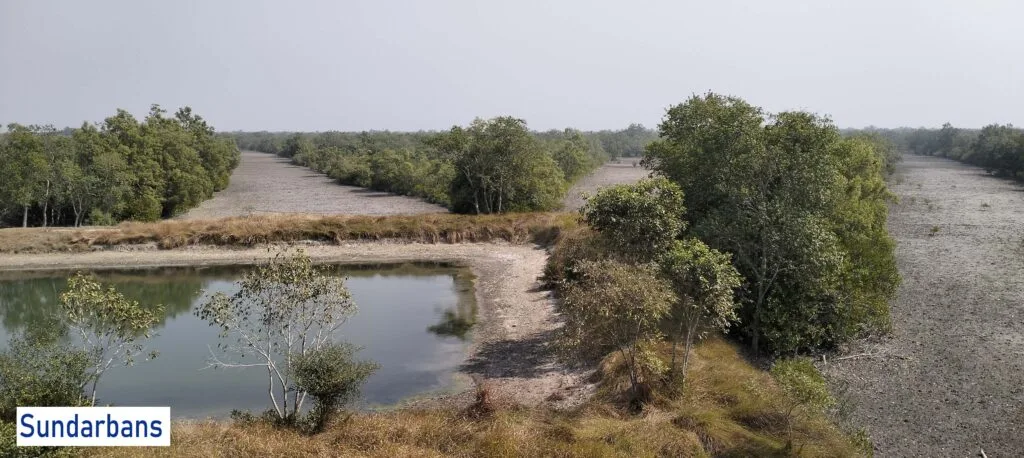
Spanning across an area of 10,000 square kilometres, the Sundarbans is a proud UNESCO World Heritage Site. This stunning mangrove forest is a natural treasure of lush green landscapes, perfectly intertwined with calmly gushing waterways—a true haven for wildlife lovers.
The Sundarbans lies at the delta of the Ganges and Brahmaputra rivers, spanning the borders of India and Bangladesh near the Bay of Bengal. Approximately 40% of this forest is in India, while the rest lies in Bangladesh. On the Indian side, there are around 102 unique islands within the region.
Locals call it ‘Sundarbans,’ which translates to ‘beautiful forest.’ This swampy landscape is one of the largest forests in India and the ultimate home of the Royal Bengal Tigers. In this guide, you will explore the location, wildlife, and significance of the Sundarbans India’s largest national park, providing a complete understanding of this unique region.
Remember, we are the best option for you. Visit Sundarban Packages – Maa Laxmi Travels, ensuring your trip is truly memorable. If you have any questions about traveling to the forest, please call us at +91 96796 41040.

Where is the Sundarbans Located?
The Sundarbans is a massive delta located in the southern parts of West Bengal, India, and the south-west region of Bangladesh. It is uniquely positioned between the Baleshwar River to the east and the Harinbanga River to the west, formed by the convergence of the Ganges, Brahmaputra, and Meghna rivers at the Bay of Bengal.
Sundarban Forest in India intersects a complex network of mudflats, tidal waterways, and small islands containing dense mangrove forests. This region represents an excellent example of ongoing ecological processes. The area is globally famous for its wide array of fauna, including over260 species of birds and the mighty Royal Bengal Tiger. Additionally, the Sundarban Delta is a safe haven for threatened species like estuarine crocodiles and Indian pythons.
Let’s now explore what the Sundarbans looks like in more detail.
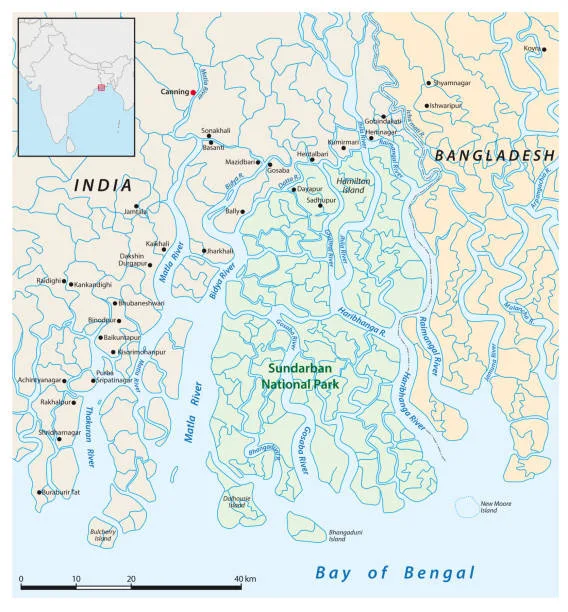
Understanding the Sundarban Forest Map
The Sundarban Forest is a labyrinth of rivers, islands, and estuaries, forming one of the world’s largest and most unique deltas. While finding a perfect Sundarban map is difficult due to its complexity, having an idea of the key areas will help you appreciate it better.
At the heart of this region is the Sundarbans National Park, a UNESCO World Heritage Site. Surrounding it is the Sundarban Biosphere Reserve, home to the world’s largest mangrove forest. These mangroves act as natural shields against storms and are a haven for incredible wildlife, including the elusive Royal Bengal Tiger.
The Sundarbans consist of over 100 islands connected by a vast network of waterways. These rivers and creeks sustain the 4.5 million people who live here. A magical highlight is that at night, some of these waters glow with bioluminescence.
Recognized by WWF–India as one of the most unique ecosystems, this region is fragile and faces challenges from climate change. To make the most of your trip, it is essential to know the best time to plan your visit so you can understand the stories hidden in the mangroves and rivers.
Exploring the Sundarban National Park Through Photos
Exploring Sundarban National Park is a true delight for wildlife lovers. Its unrivalled beauty presents countless picture-perfect moments and Sundarban Forest Photos that you can capture through your camera’s lens. To help you experience these scenic spots, we have designed the perfect 2 Night 3 Days forest visit which is ideal for photography enthusiasts.
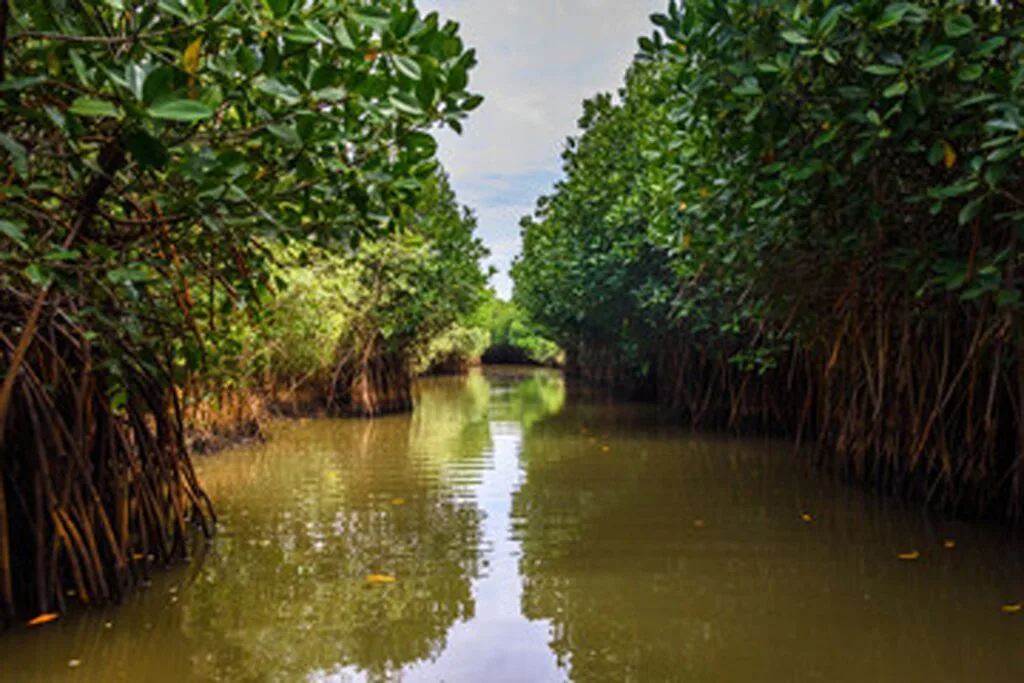
Scenic Spots to Capture in Sundarbans
Mangroves & Boat Rides
Enjoy the ultimate mangrove experience via a Sundarbans boat ride. Most tourists acknowledge that boating is the most immersive way to explore the dense canopy. An early morning ride is highly recommended for capturing eye-captivating moments of birds and animals in their natural habitat. If you are short on time, you can experience this through our specially curated one-day itinerary.
Marichjhanpi
This spot is famous for its dense mangrove clusters and hauntingly beautiful landscapes. Marichjhanpi holds a significant place in local history and was even featured in a popular Bengali movie in 2020, making it a must-visit for curious travellers.
Sajnekhali Bird Sanctuary
For avid bird watchers, the Sundarban National Park offers endless opportunities. With your DSLR, you can capture species like Kingfishers, Open-billed Storks, Paradise Flycatchers, and the rare Asian Dowitcher.
Ghoramara Island
Located about 92 km from Kolkata, Ghoramara is a small but significant island. It tells a powerful story of the impact of global warming and soil erosion. Capturing the life of the locals here adds a deep emotional layer to your travel gallery.
Watch Towers of Sundarban
The forest department has built several strategic watchtowers like Sajnekhali, Sudhanyakhali, Do-Banki, and Burirdabri. These are ideal for panoramic vistas and are your best bet for spotting the Royal Bengal Tiger. To cover all these major towers and experience the deep mangroves, our 2 Night 3 Days forest itinerary is the most popular choice among wildlife lovers as it allows ample time for exploration.
Important Safari Timings:
Please note that only boat safaris are allowed inside the park. To make the most of your journey, start early! Safaris typically run from 8:30 AM to 4:00 PM. For safety reasons, boating is strictly prohibited after 6:30 PM.
What is the Total Area of the Sundarbans?
The Sundarbans is a massive transboundary ecosystem, encompassing around 10,277 square kilometres. Bangladesh holds the larger share with approximately 6,017 square kilometres, while around 4,260 square kilometres of this dense forest forms a vital part of West Bengal, India.
As the world’s largest mangrove ecosystem, the region is dominated by the Heritiera fomes trees, popularly known as Sundari. The Sundarban Forest India epitomises the raw wilderness with its complex network of springs, rivers, estuaries, and tidal creeks.
Beyond its beauty, this largest forest in India plays a crucial role in land reclamation and acts as a natural shield, protecting coastal habitats from powerful cyclones and tidal surges. Additionally, the Sundarbans significantly uplift the socio-economic conditions of local communities, who depend on forest produce like honey and fish for their livelihood.
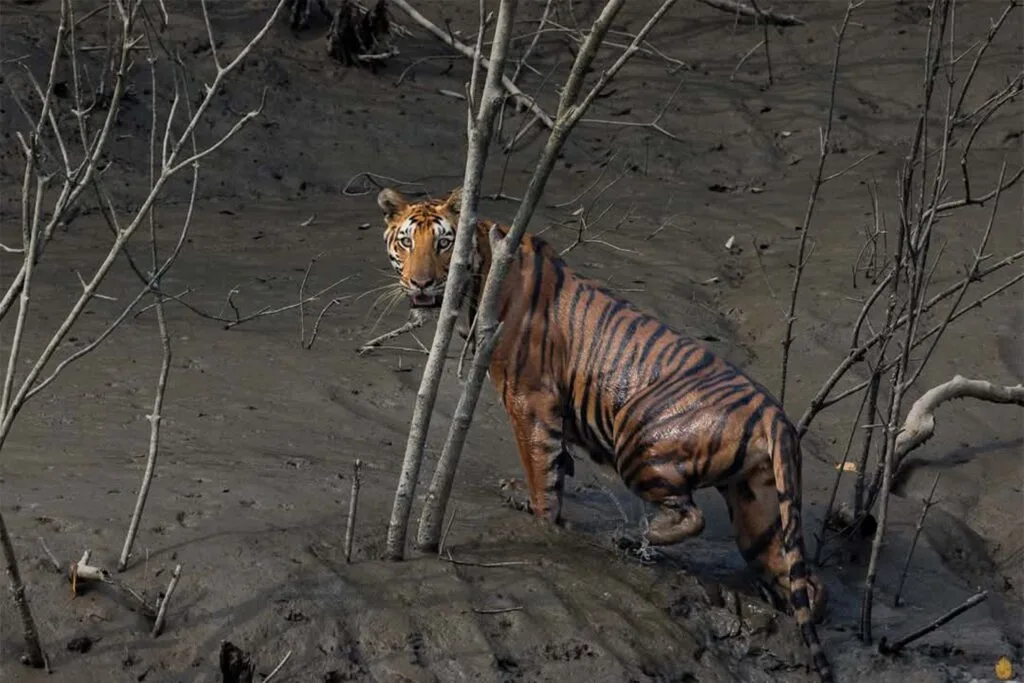
Famous Animals of the Sundarbans: Home of the Royal Bengal Tigers
The Royal Bengal Tiger is the prime attraction of this region. The Sundarbans is India’s only mangrove delta that serves as a home to this majestic species. This forest holds a significant portion of the world’s wild tiger population. While the habitat is shared between India and Bangladesh, current estimates show around 101 tigers in India and 114 in Bangladesh. If you want to know about the best time for tiger sighting and trip costs, you can read our complete price and travel guide.
Beyond the tigers, the forest is a sanctuary for various predators and reptiles. You can find Leopards, Fishing Cats, Jungle Cats, and the fearsome Estuarine Crocodiles. The reptilian world here is equally diverse, featuring Pythons, King Cobras, Olive Ridley Turtles, and Green Vine Snakes.
For bird watchers, the Sundarbans is a true paradise with over 200 bird species. Keep your binoculars ready for the White-bellied Sea Eagle, Brown-winged Kingfisher, and the Lesser Adjutant. The underwater world is just as vibrant, home to Hermit Crabs, Starfish, and Sawfish. All these incredible wildlife species found here make every safari adventure a memory for a life time.
To preserve this unique ecosystem, Project Tiger plays a vital role. While its primary focus is protecting the Royal Bengal Tiger, it now ensures the safety of the entire ecological reserve.
The Sundarbans is not just a wildlife haven; it is also a natural fortress that protects the coastal belt from storms and floods. Let’s explore how in the next section.
How the Sundarbans Protect Against Storms and Floods
The Sundarban National Park acts as nature’s very own disaster-prevention system. Situated along the coastal belt of the Bay of Bengal, it houses the world’s most extensive mangrove cover, which serves as a natural barrier for millions of people.
The mangrove cover of the Sundarban forest significantly decreases the impact of devastating cyclones, tidal waves, and high wind currents. These dense trees act as a speed breaker, lowering the wind’s destructive capacity and minimising the damage to inland areas. Beyond its natural strength, the way we visit this forest also matters. You can learn more about how our community-based initiatives help in these conservation efforts.
One of the most fascinating features of mangroves is their deep percolating roots. These roots trap sediments and stabilize the coastal belt, effectively preventing soil erosion caused by storms. Furthermore, these forests help protect delicate coral reefs and seagrass meadows by filtering the water flow.
Moreover, the Sundarban Delta plays a vital role in curbingrising global warming concerns. It acts as a massive carbon sink, absorbing huge amounts of carbon dioxide from the atmosphere. When mangroves die, their roots and branches store carbon deep within the underwater soil, slowing down decomposition and helping the planet breathe.
Closing Thoughts: The Need to Protect the Sundarbans
The UNESCO World Heritage Site, Sundarbans, is more than just a natural wonder. It is where the Ganges, Brahmaputra, and Meghna rivers converge to create the world’s largest mangrove ecosystem. This vast delta acts as a vital shield for coastal communities against cyclones and tidal surges.
Sundarban National Park India remains a treasure trove of life, protecting the iconic Royal Bengal Tiger and hundreds of other species. However, this dynamic landscape is fragile. It faces constant threats from climate change, deforestation, and habitat loss, making its conservation more urgent than ever.
Beyond its ecology, the Sundarbans is the lifeline for over 4.5 million people. Their culture, food security, and livelihoods are deeply intertwined with this forest. Therefore, protecting the Sundarbans means safeguarding both a global biodiversity hotspot and the traditions of its local inhabitants.
Sustainable tourism can play a massive role in conservation by raising awareness and supporting local economies. By choosing responsible travel and supporting conservation programs, we can ensure that this regional treasure remains a legacy for future generations. After all, protecting the Sundarbans is a global responsibility.